
July1, 2026
Protecting Habitat and Endangered Sharks
The Trump Administration brought deep cuts to agencies like NOAA and the National Marine Sanctuary and has removed funded programs we have partnered with, including the dismantlement of the USAID. Over the last 18 months we have focused on campaigns fighting against weakening environmental regulations and maintaining protection in our National Marine Sanctuaries. Since 2025 we are part of an Endangered Species Coalition to defend the Endangered Species Act, maintaining the status for two species of sharks listed in 2023 and 2024. In Hawai’i we hosted three ocean events fighting the Trump directive to open the Papahānaumokuākea National Marine Sanctuary to commercial fishing.
With the International Marine Mammal Project at Earth Island Institute, we are seeking to protect California gray whales under the endangered species act. A great success story, this whale increased from a low of 3000 to almost 30,000 after protections. This was first species to be delisted from the ESA after recovery in 1994. Sadly, due to a decline in food related to climate change in the Arctic the recovered whale population has collapsed to less than half. Our Endangered Species Act petition received 28,952 signatures sent to the Congress.
Marine Protection
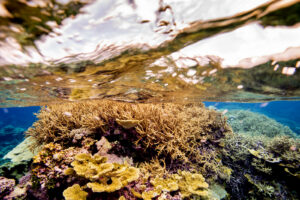
COVID has led us to move away from an MPA project we initiated in Indonesia and focused back in California and Hawaii in marine protection. As one of the Co-chairs of the MPA Collaborative network, we have helped expand California’s Marine Protected Area network. At the Fish and Game Commission, granted 7 out of 15 remaining regulatory petitions. This added 15,000 acres of protected coastal waters and raising the total share of conserved California coastal waters from previous levels to 22.2%.

Protecting California Sharks and Public Safety
Warmer sea temperatures have shifted white shark populations near shore in S. California, and we were able to leverage public safety concerns to support an emergency regulation to ban fishing gear for large sharks on CA piers and beaches. This increases public safety, reduces injury or death to protected shark species and reduces suffering. We are now working to make these regulations permanent at the Fish and Game Commission in November 2026.
On September 5th we hosted a public event White Sharks Science, Safety and Survival with shark scientist Dr. Chris Lowe of the Long Beach Shark Lab, Carlos “The Malibu Artist” Guana, and our team scientist Carmen Koepfer and white shark survivor Maria Korcmaros. The public joined shark educators ate watch a film and a panel on white sharks and support shark and marine protection. In October we submitted our appeal to the Fish and Game Commission to make these safety regulations permanent, and will appear before the Commission in November. Our petition has reached over 500 signatures that will be submitted to the Commission and we are still building.

Hawaii
Since COVID our tropical biology and conservation work has shifted from SE Asia to Hawai’i. We have been long term supporters of the first Marine National Monument in the Northwest Hawaiian Island and now a sanctuary known as the Papahānaumokuākea. In 2026 the Secretary of Commerce Doug Burgum directed agencies to develop plans to open the Papahānaumokuākea Marine National Monument, the Marianas Islands and the Rose Atoll Marine National Monuments for commercial fishing.
In 2017 and again in 2026 Shark Stewards has campaigned to block fishing in the Marine National Monuments. Large marine protected areas like these are critical for preserving migratory marine megafauna like sea turtles, marine mammals and sharks. They also serve as a buffer against climate change and a source of larvae and fish for healthy fisheries outside the boundaries.
In Kona we met with former superintendent ‘Aulani Wilhelm and other elders at the Kona Ocean Fest in support of maintaining current protection in the Papahānaumokuākea National Marine Sanctuary. We also participate at the National Marine Sanctuary Day with the Papahanumokukea National Marine Sanctuary at the Mokupapa Center in Hilo with the Samoan National Marine Sanctuary and the Hawaii Humpback National Marine Sanctuary. At another event with Jack’s Dive Locker we met with Superintendent Athline Clark as part of our photo campaign to support the Sanctuary. We sent petition signatures to Governor Josh Green and Hawaiian Senators Brian Schatz and Mazie Hirono to garner their support in Congress for the Sanctuary and Monument, and prevent commercial fishing.
We have partnered with local community groups and the sanctuary HQ Mokupāpapa Discovery Center in Hilo to help combat the proposal to fish in the Papahānaumokuākea Marine National Monument ( the largest contiguous fully protected conservation area under U.S. jurisdiction, covering 582,578 square miles of the Pacific Ocean northwest of the main Hawaiian Islands). We help put on an ocean day and hosted two other public events to leverage public support to support shark protection and maintaining marine protection in Hawaiian waters reaching 2500 people.
Hawaiʻi State Board Bans Aquarium Fish Collection
After 7 years of court deliberations, reviews and hearings, local Hawaiians and the ocean conservation community in Hawaiʻi have stopped the aquarium industry from collecting wild fish. Before the ban in 2017, aquarium collectors shipped over 500,000 tangs, angelfish and other ornate reef fish per year from Hawaiian waters. Sent to pet shops and collectors on the mainland, this trade is cruel and unsustainable, but lucrative to a few. Opponents objected to the extremely high death rate during shipping and handling (over 50%) and harm to reef ecosystems. These fish are important algae eaters maintaining the health of the coral reefs (and the reef sharks).
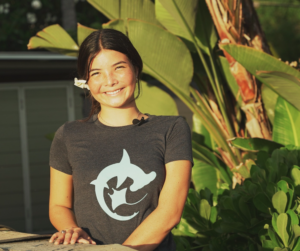
In July, 2026 the Hawaii State Board of Land and Natural Resources (BLNR) voted to reject a proposed rules package to reopen commercial aquarium fish collection, keeping the ban in place. Shark Stewards joined the leaders of the Miloliʻi ohana (village family) and other local advocates objecting to this practice, with comments provided by our young intern in Kona (above). Today the Lauʻipala (yellow tang)- the Kona Gold- swims safely in the waves!
Education
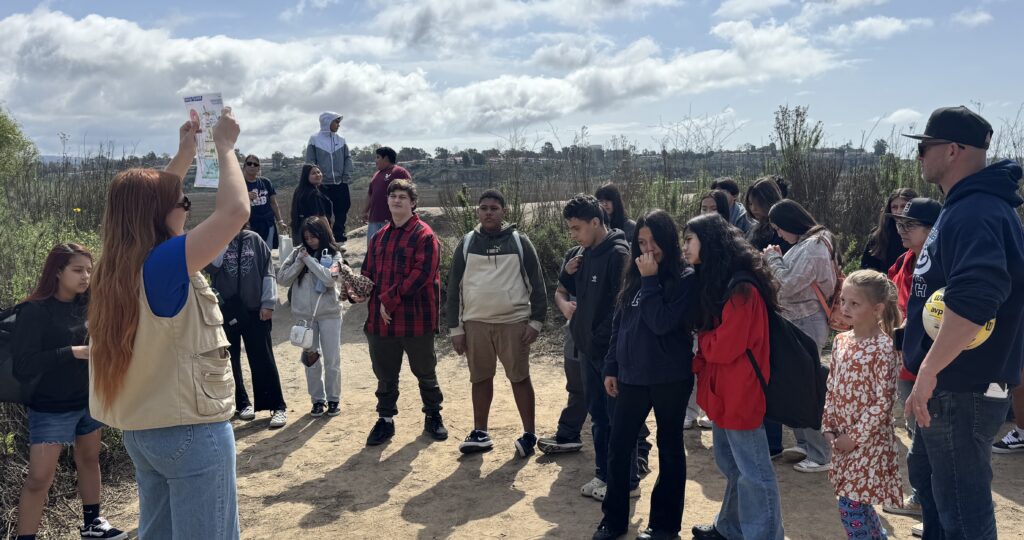
In Hawaii we partnered with Aunty Cindi Punihaole of the ReefTeach in Kahalu’u Bay educating tourists and the community on the importance of coral reefs. We are initiating a reef survey and crown of thorns starfish monitoring at Kahalu’u Bay with Reef Teach.
Thanks to a donation and match from the Ignite foundation we have mentored two outstanding interns this year. In 2025 Ren Hampton led our Stop the Ocean Steal Campaign defending the Endangered Species Act and our National Marine Sanctuaries. This year Hawaiian native Taira Aoki is leading an outreach effort to support reef and fish protection in Hawaii and inspire youth. Building on our reel of shooting for the documentary Kahu Mano, we are conducting interviews and doing a short series called Listen to the Sea.https://meet.google.com/iei-cxoi-yob
We screened the first episode with other local films at our 5th annual Kona Ocean Film day benefitting ReefTeach. We were also involved with two other events, a three day Kona Ocean Fest and strategic planning We are actively fighting commercial fishing in the Papahānaumokuākea Marine National Monument, the Marianas Islands and the Rose Atoll Marine National Monuments to commercial fishing. The Kona Ocean Fest had over 1500 participants with Hawaii Kupuna (elders) including a new partnership with ReefTeach and Aunty Cindi Punihaole of Kahalu’u.
In 2027 we are planning to work with a school in Kona HI to teach 300 youth about the ocean and create action items youth can take to protect marine wildlife and the ocean and build on the no commercial fishing the Marine Monument campaign. We also created a new platform the Shark Academy web site for our youth and education programs to reach underserved youth across the USA.
Northern California
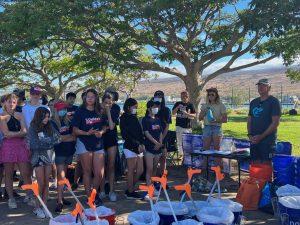
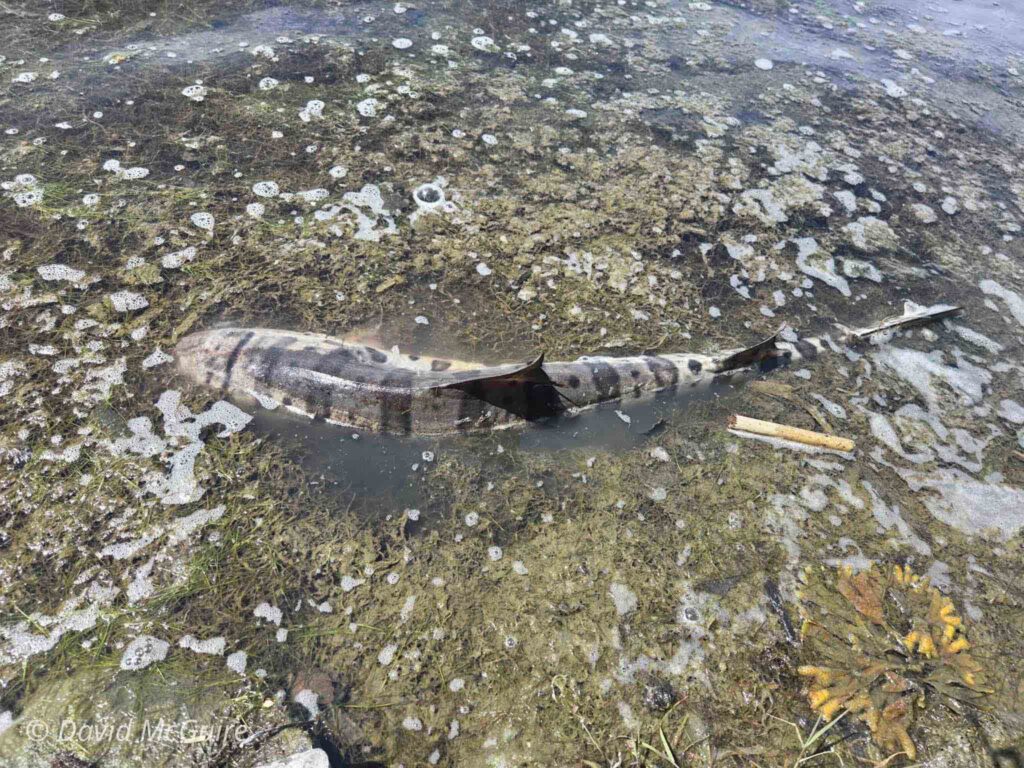
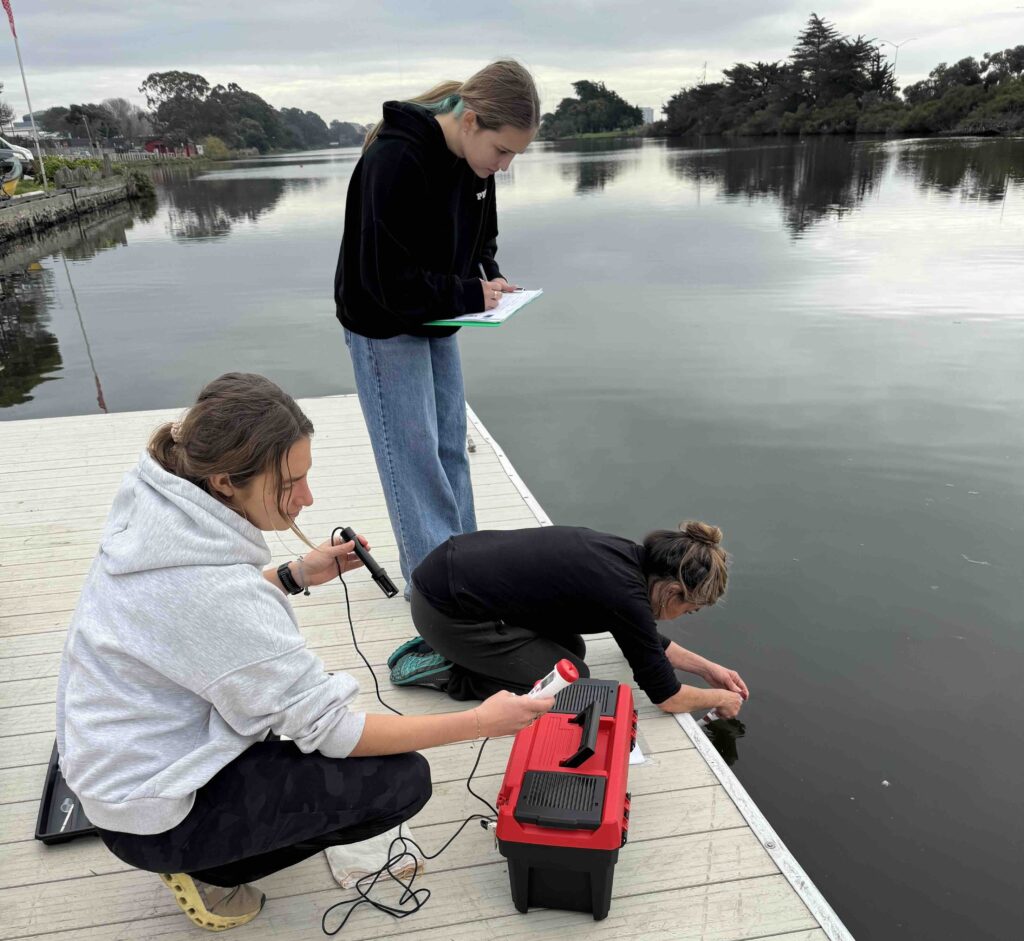
In Berkeley CA, Supported by a grant from the UC Berkeley Chancellor’s Community Fund, we have been conducting routine water quality testing and monitoring with UC Berkeley undergraduates from the Ocean Society and the Cal Surfrider Foundation Clubs. In 2024 the program expanded to include regular cleanups, wildlife recording and community days with invasive plant and native plantings. The initial and ongoing focus of this project has been fish mortality, specifically leopard sharks and bat rays stranded, dying and dead from undefined causes. The Shark Watch records living and dead sharks and is investigating causal effects to large morbidity and mortality events. Aiding the California Department of Fish and Wildlife, we are collecting dead specimens for pathological analysis, determination of disease and working to mitigate causal factors.
Climate change is creating a new project opportunity to reduce flooding and restore habitat at one of our project sites- the Aquatic Park in Berkeley. The initial and ongoing focus of this project has been fish mortality, specifically leopard sharks and bat rays stranded, dying and dead from undefined causes. The Shark Watch records living and dead sharks and is investigating causal effects to large morbidity and mortality events. Aiding the California Department of Fish and Wildlife, we are collecting dead specimens for pathological analysis, determination of disease and working to mitigate causal factors.
We communicated our work to over 2500 people at the Berkeley Bay Fest and a Winterfest youth event, supporting park cleanup activities, engage new volunteers and supporters and develop a community science program at Aquatic Park.
We have also built on our partnership with UC Berkeley, the City of Berkeley and three non profit groups and public to develop a restoration and mitigation plan to improve water conditions for wildlife and public use in the lagoon. Our monitoring report and shark and ray observations have helped the City to justify receiving a $4.1 million dollar EPA grant to restore the condition of tidal tubes leading from the Bay to the lagoon beneath the I80 freeway. In the winter of 2026- 2027 we are poised to collect water quality data during the Super El Niño” including pollutants and sea level rise and storm damage as well as collecting, mapping and analyzing dead sharks and rays. Learn more by reading our 137 page report on monitoring with recommendations to the City.
Plastic Pollution Litigation and Cleanup Data
We had 1600 people at our two No Kings events in Berkeley with two press stories. Our 30 beach cleanups in Berkeley picked up 3000 pounds of plastic and marine debris, including 6300 cigarette butts. With the Earth Island Advocates and Plastic Pollution Coalition, we successfully settled with two plastic producers, obtaining a commitment to reduce using virgin plastic and increase recycled plastic in their manufacturing, potentially reducing tons of greenhouse gases and reducing plastic pollution. Read our Plastics and Branding Report based on a year’s data on cleanup data.
Southern California
Our Southern California team hosted monthly cleanups and monitoring at Junipero Beach in Long Beach. Instead of our annual Run 4 Sharks and Ocean Health Fair, we hosted the white shark survival workshop in Long Beach and participated at the 5th year Celebration of the Coastal Management Act with the California Natural Resources Commission at Junipero Beach. We also participated at events at the Ocean Institute in Dana Point, two colleges and the Munk Ocean Fest in La Jolla CA, reaching an audience of over 5000 community members this spring and summer.
Volunteers
We had 483 active volunteers at our events this year including 225 students at schools and our events, reaching 5500 people directly. Inspiring and engaging youth is core to our mission. Our seventeen year old intern (and volunteer of the year 2024) 17 year old Katya Koriabine has co-published a scientific paper, led 12 cleanup efforts, received a presidents award for youth volunteering. As she applies to University Katya is completing a scout’s Gold Award in our Aquatic Park Stewardship program.In California 540 volunteers joined 22 cleanups in Berkeley, Long Beach and Kona, removing over 3000 pounds of plastic marine debris from beaches and waterways.
Goals for 2026-2027
We hope the results of the midterm elections will shift the Congress and allow us to free up time away from defending federal laws from erosive executive orders and go back to creating more protection for sharks and marine habitat.
Our biggest fundraising goal is to raise $100,000 to hire a Deputy Director to train and work in development and maintain the legacy of Shark Stewards into the future.