
June 24, 2026

Papahānaumokuākea Marine National Monument at Risk
On March 30, 2026, at Trump’s direction under the Executive Order 14276, “Restoring American Seafood Competitiveness,” the Western Pacific Regional Fishery Management Council (Wespac) approved actions to move toward restoring commercial fishing in the Papahānaumokuākea Marine National Monument and Sanctuary. The Marianas Island and Rose Atoll National Marine Monuments are also under scrutiny in this directive.
June 11, 2026 President Trump signed the newest proclamation expanding commercial fishing access to Papahānaumokuākea, Mariana Trench, and Rose Atoll. The Western Pacific Regional Fishery Management Council and the Hawaii Longline Association have praised this move and have been directed to submit a fishing plan. The industry argues that it restores fishery management to local councils under the Magnuson-Stevens Act and boosts the U.S. seafood industry. However, vessels cannot enter the monuments immediately; access still requires federal review and rule-making.
Papahānaumokuākea Marine National Monument and Sanctuary is the largest contiguous fully protected conservation area under the U.S. flag, and one of the largest marine conservation areas in the world. It encompasses 582,578 square miles of the Pacific Ocean (1,508,870 square kilometers) – an area larger than all the country’s national parks combined.
The Northwestern Hawaiian Islands Marine National Monument was established by Presidential Proclamation 8031 on June 15, 2006 under the authority of the Antiquities Act (16 U.S.C. 431-433). It was expressly created to protect an exceptional array of natural and cultural resources. A year later, it was given its Hawaiian name, Papahānaumokuākea.
The 1,350 mile stretch of coral islands, seamounts, banks and shoals supports an incredible diversity of coral, fish, birds, marine mammals and other flora and fauna, many of which are unique to the Hawaiian Island chain. Many of the islands and shallow water environments are important habitats for rare species such as the threatened green turtle and the endangered Hawaiian monk seal, as well as the 14 million seabirds representing 22 species that breed and nest there. Land areas also provide a home for four species of bird found nowhere else in the world, including the world’s most endangered duck, the Laysan duck.
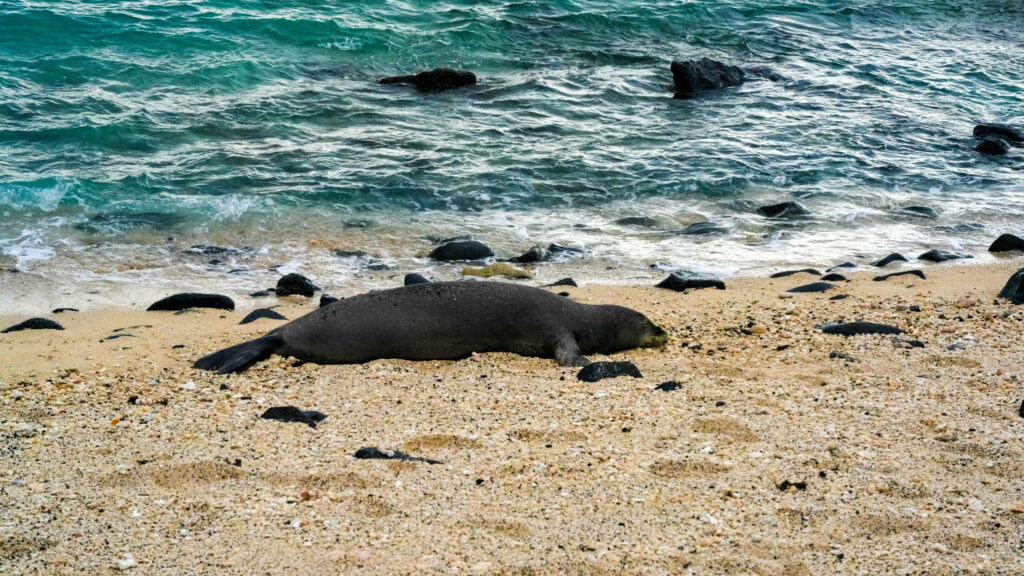
Approved in the final days of the Biden Administration, NOAA is currently designating the marine portions of the Papahānaumokuākea Marine National Monument in the Hawaiian Islands as America’s 18th National Marine Sanctuary. A 582,570 square-mile area in the Pacific Ocean, the Papahānaumokuākea National Marine Sanctuary is the largest in our National Marine Sanctuary System, and the second largest marine protected area in the world. The Papahānaumokuākea National Marine Sanctuary will provide additional research and management to protect the area’s significant biological, cultural and religious treasures. These include sacred sites, the healthiest, most intact coral reef in the world, with marine species found only in Hawai’i, including the endangered Monk Seal, the ‘llio holo I ka uaua (below).
Help Block Fishing in the Pacific Marine National Monuments!
Rose Atoll Marine National Monument
Established in 2009, the Rose Atoll Marine National Monument is approximately 130 nautical miles east-southeast of Pago Pago Harbor in American Samoa. Rose Atoll is the easternmost Samoan island and the southernmost point of the United States.
The Monument area consists of approximately 13,436 square miles (34,800 square kilometers) and the outer boundary is approximately 50 nautical miles from the mean low water line of Rose Atoll
Rose Atoll remains one of the most pristine atolls in the world. The marine environment around Rose Atoll supports a dynamic reef ecosystem that is home to a diverse assemblage of marine species, many of which are threatened or endangered.
One of the atoll’s most striking features is the pink hue of fringing reef caused by abundance of coralline algae, the primary reef-building species. Though roughly 100 species of stony corals exist today, crustose coralline algae dominate Rose Atoll’s shallow reefs, making them distinctive from those found in other Samoan islands.
The marine area provides isolated, undisturbed nesting grounds for green and hawksbill sea turtles and contains the largest number of nesting turtles in American Samoa. The waters within and surrounding the Rose Atoll Monument are frequented by numerous large predators, such as snappers, jacks, groupers, barracudas, and whitetip, blacktip, and gray reef sharks.
With more intact coral reefs, threatened and endangered wildlife, and important pelagic species like sea turtles, sharks and whales, the Pacific Monuments Ireefs and slands house some of the healthiest, biodiverse, and wildest ecosystems in the Pacific Ocean. The surrounding ocean hosts unique deepwater species and habitat, and the waterways have a rich history of Indigenous habitation and use, including wayfinding using winds, stars, and currents, connecting Native Pacific islanders across the Pacific, including Hawai’i.
In June, 2025 President Donald Trump proposed shrinking or eliminating protection in existing National Monuments and opening the Pacific Marine National Monuments to commercial fishing.
The first Marine Monument to be opened was proposed on April 17, 2025 when President Trump signed an executive order that opens up commercial fishing in the Pacific Islands Heritage National Marine Monument, covering about 490,000 square miles of ocean southwest of Hawaii.
On June 11, he also signed Executive Order 1426, which gave the nation’s regional fishery councils 180 days to review management of the country’s five marine national monuments and submit recommendations to open them or keep them closed. Four of the five Marine National Monuments are in the Pacific region. One, the Papahānaumokuākea Marine National Monument in Hawaiʻi, has significant cultural value to indigenous people, and is also a National Marine Sanctuary.
But on August 2025, federal district court in Hawaii strikes down the April order, ruling that the administration bypassed public comment requirements and halting commercial fishing in the monument.
First Under Fire in 2025 was the The Pacific Islands Heritage Marine National Monument.
The Monument includes 165 known seamounts that are hotspots of species abundance and diversity. It is one of the most pristine tropical marine environments in the world, and vulnerable to the impacts of climate change and ocean acidification.
In 2025 Tuna longliners fished the protected waters of Johnston Atoll, 900 miles southwest of Hawaiʻi. This ancient atoll, (probably one of the oldest in the Pacific Ocean) is comprised of Johnston, Sand, North, and East Islands. It’s the northernmost point of the Line Islands archipelago. Johnston supports at least 45 coral species, including a thriving table coral community and a dozen species found only in the Hawaiian and northern Line Islands. Large populations of seabirds, sea turtles, whales, and reef sharks are found here as well.
Challeneged in Hawai’i federal court, this violation of the Antiquities Act was blocked in Hawaii’s District court. The lawsuit Kapa’a v. Trump, challenged the April 2025 reversal of a long-standing ban on industrial fishing, which protected endangered marine life.
Now Trump is continuing his effort to undermine marine protection established by Republican President GW Bush, and expanded and increased protective status under two successive Administrations.
This protection of the Pacific Marine Monuments are at risk, due to a proclamation by President Trump to open America’s largest and most pristine reefs and waters to commercial fishing.
Send a Note to Your Congressperson to leave our Marine Monument Status in Place
How to Contact Your Members of Congress
Member websites provide comprehensive contact information:

Shark Steward’s mission is to restore ocean health by saving sharks from overfishing and the shark fin trade, and protecting critical marine habitat through the establishment of marine protected areas and shark sanctuaries. Help defend decades of marine protection in US waters. With your help, we can do it!