
March 25, 2025 The Trump Administration and Congress are Weakening a 52 Year Law That has Pushed Back Extinction The Endangered Species Act (ESA), passed in 1973, has long been […]
Read MoreHope for the High Seas- New Global Treaty Signed

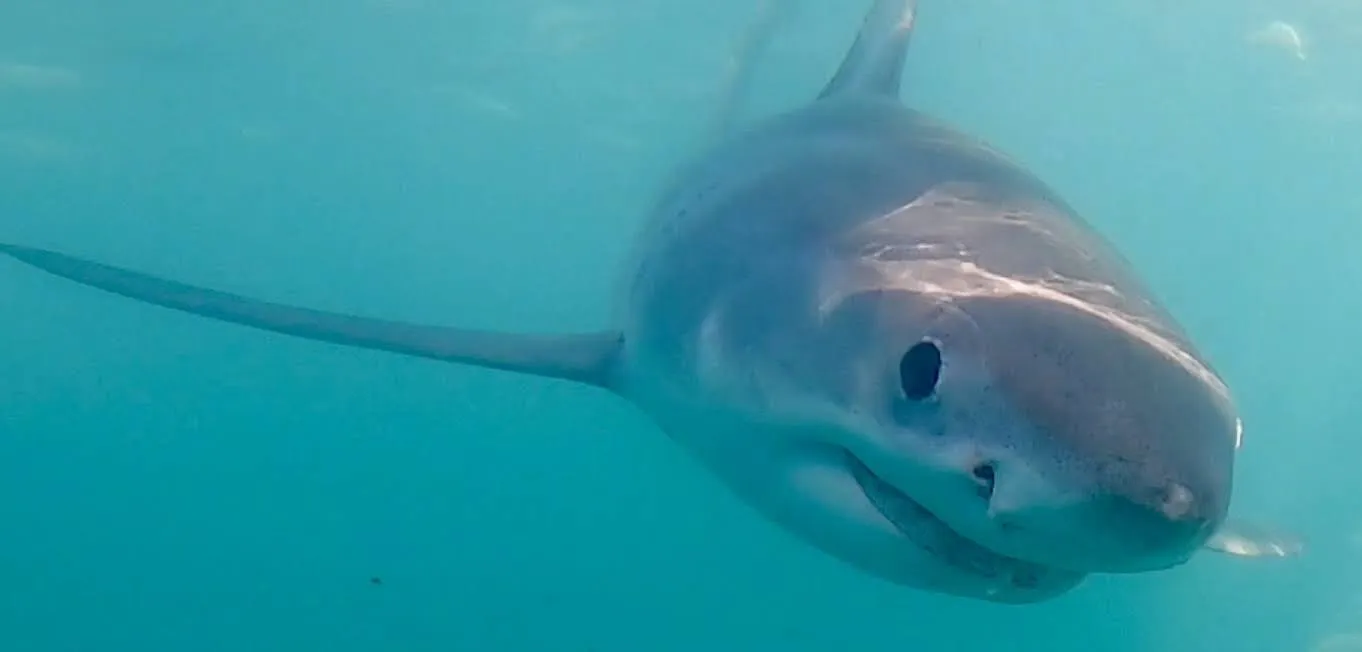
In the Northeast Pacific, adult white sharks annually migrate far from USA and Mexican protection and are vulnerable to being killed as bycatch on international longliners or shark finning on the high seas. This is one of the reasons we celebrate their return to Sanctuary during Sharktober each year!
Read MoreGreat Whites on the Rise

Scientists and shark conservation organizations like Shark Stewards call this period “Sharktober” to describe the period of heightened great white shark (hereafter called white sharks) activity and human encounters along the California coast. As the fall season arrives along California’s coastline, a compelling and cautionary period for ocean-goers occurs when adult great white sharks return to California waters. These fall months coincide with an increase in human -shark interactions and a few, but rare, high profile human shark interactions, (aka shark attacks.) Here we discuss the incidence of great white shark human interactions* along the West Coast of North America, the relative risk and how to avoid becoming the next statistic.
Read MoreSHARKED Act in Senate Committee- Act Now
Reintroduced into the House in spring 2024, the Supporting the Health of Aquatic systems through Research Knowledge and Enhanced Dialogue Act of 2025 is supported by the recreational fishing industry and lobby bemoaning shark depredation on their catch. The bill could could have serious impacts on shark populations in all US waters. While ostensibly having Congress create a task force to examine shark depredation and human interactions, it has the potential to open protected areas or fishing for sharks. Without little scientific merit or credible support, the SHARKED Act language is a thinly veiled approach to open fishing on protected species and greenlight shark culls, tournaments and sportfishing for sharks in US waters.
Read MoreThe Devil’s Teeth & Iron Swimmers

Today Catherine Breed—UC Berkeley alum, Bay Area marathon-swimming force, and connoisseur of extreme swims, has completed the SE Farallones to the Golden Gate swim under classic marathon swimming rules (no contact, no suit aids, no music). In calm conditions Breed Catherine Breed became the 7th swimmer and the 4th to swim from SE Farallon Island to the Golden Gate Bridge in 13 hours, 54 minutes- shaving almost 4 minutes off the previous record held by Joseph Locke in 2015.
Read MoreAttenboroughʻs Ocean Hope Threatened in Pacific

While the California MPAs remain protected in state waters, the federal marine protection in the Pacific is now at risk under the Trump Administration. A painful irony in the filmʻs conclusion is Hawaiian cultural practitioner and champion for the Papahānaumokuākea MNM Pelika Andrade overlooking the remote islands, the same waters proposed for commercial fishing by Executive Order.
Read MoreShark Stewardʻs Katya Awarded President’s Volunteer Service Award

Shark Stewards is proud to announce that our youth volunteer Katherina (Katya) Korbiane has been awarded the President’s Volunteer Service Award (PVSA). Signed by President Joseph Biden, this is a prestigious award established in 2003 to honor individuals and groups who demonstrate a sustained commitment to volunteer service over 12 months.
Read MoreOceanic Blacktips and Swimming for Shark Habitat

Reef sharks determined “Functionally Extinct” on 20% of World’s Reefs. In Hawai’i these sharks are protected, but their habitat is being threatened in the Marine National Monuments under the Trump Administration.
In August, I will be swimming for sharks and maintaining protection in the Pacific Marine National Monuments, including the Papahānaumokuākea Marine National Monument and National Marine Sanctuary. I will also be searching for our local oceanic blacktip shark Bruno.
Shark Depredation Act Introduced in Senate

This week, Senators Rick Scott (R-FL) and Brian Schatz (D-HI) introduced the Supporting the Health of Aquatic Systems through Research, Knowledge, and Enhanced Dialogue (SHARKED) Act. Sharks have declined by 71% worlwide since 1970, primarily due to overfishing. Shark Stewards is submitting comments and urging lawmakers to rely on scientists and fisheries managers, supporting stock assessment work and better, transparent data, and caution any shark management or culling decsions
Read MoreSave Our Seas, Save Ourselves
On July 12, Shark Stewards hosted a screening of David Attenboroughʻs Ocean and other short films at our annual ocean education event in Kailua-Kona Hawaii. This impactful film premiered at the UN Ocean Conference June 8, 2025. In Ocean, Sir David so eloquently highlights the numerous threats to the ocean and marine life, particularly bottom trawling. A major source of hope at the UN conference and in the film, is the establishment of no-take marine protected areas (MPAs), including the Channel Islands MPAs in California, and the Papahānaumokuākea in Hawaiian waters.
Read More