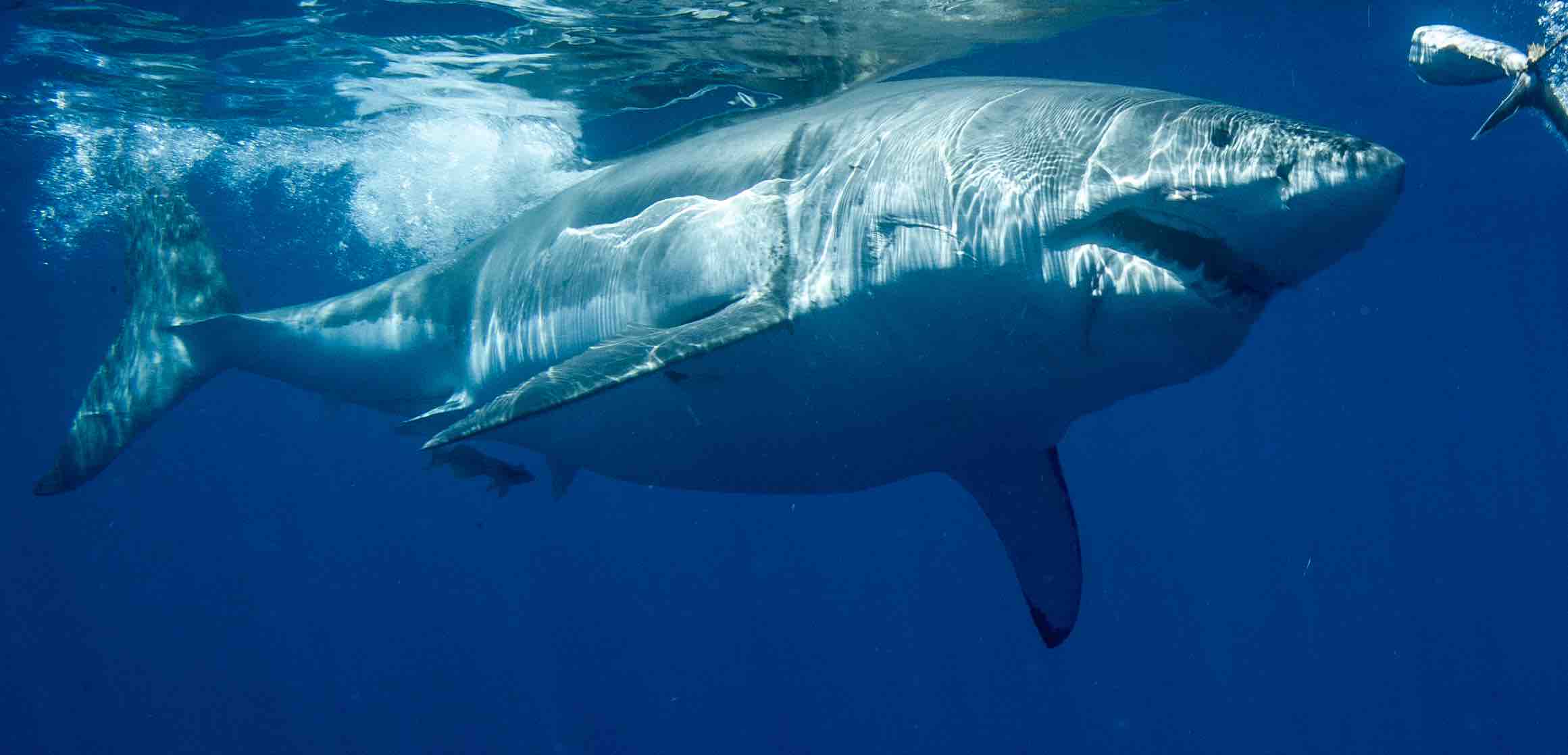
Join Shark Stewards Director David McGuire and Southern California Chair Maria Korcmaros for a conversation on shark attacks, diving with sharks and saving them.
Images and short film from recent work with Tiger sharks in Hawaii, and international shark conservation work with shark stewards.
August 30 is International Whale Shark Day! This day was established to raise awareness around the importance of whale sharks to marine ecosystems and their dwindling population numbers, and to encourage conservation efforts to protect these gentle sharks.
Sure, the photography is incredible and the content is exciting on Shark Week, but most of us who actually spend our time in the ocean already know that sharks are cool, and humans are the ones to be feared, not the sharks.
Shark Stewards joins the Center for Biological Diversity calling for increased protection for Great Hammerhead Sharks under the ESA and in their complete range. We are also asking NMFS to support the motion to uplist this species and the scalloped hammerhead to Appendix I at the Convention of International Trade of Endangered Species in Panama, 2022.
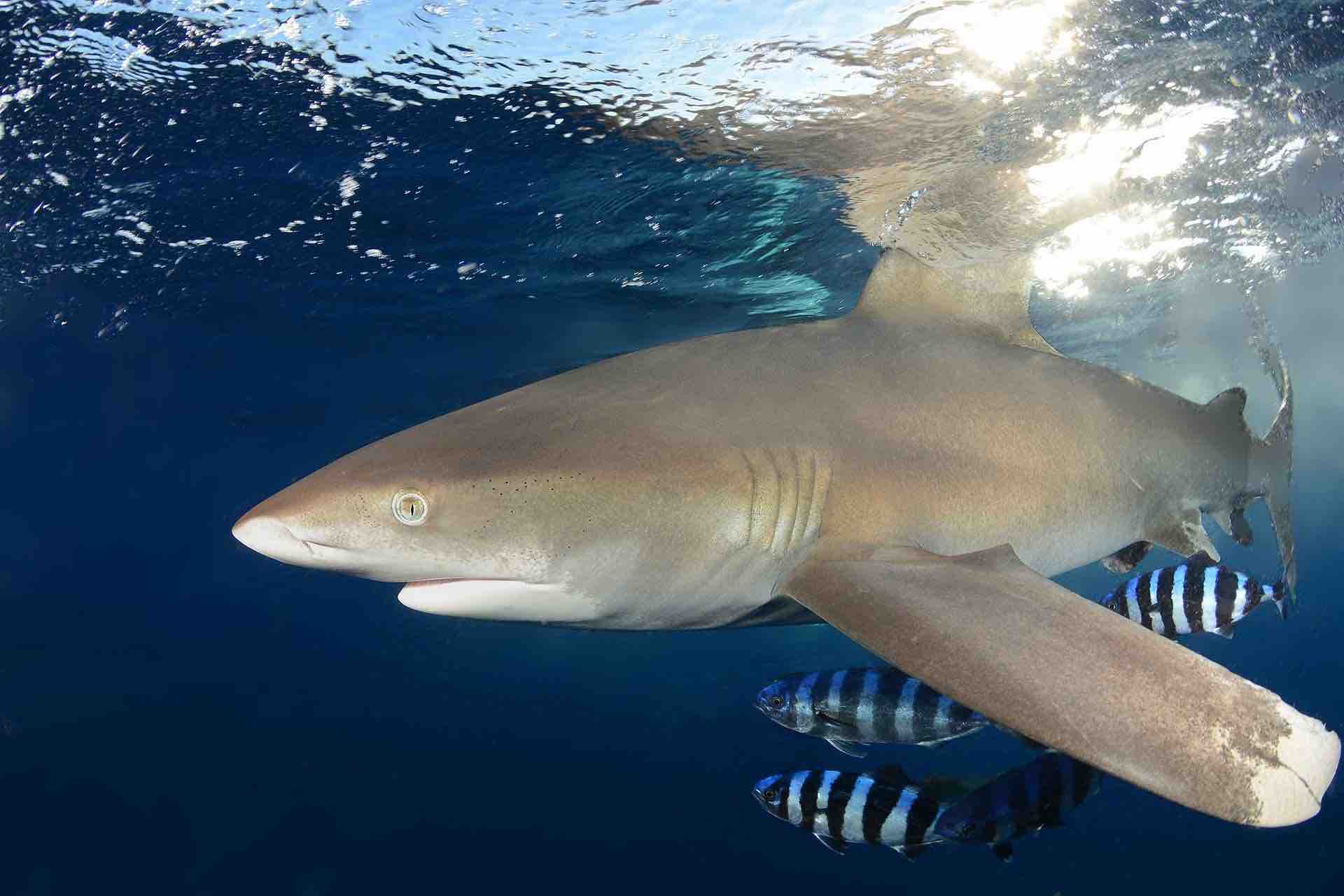
A new regulation prohibiting the use of wire leaders in longline fisheries is expected to increase the survival of hooked oceanic whitetip sharks by up to 30%.
Sharks are killed at an alarming rate, their death affects the sea population around them, and they are lacking support based on false man-eating narratives. In an article by Global
I’m writing you to thank you for your past engagement in our California community conservation and education, or joining us on our Sharktober Farallon Sanctuary expeditions. In 2021 we resumed […]
On September 25, 2017, Hang Hing Herbal Medicine Ltd. imported a shipment containing 22 bags of processed shark fins, declared as fish bone, into Richmond, BC. The Canada Border Services Agency noted that the shipment contained wildlife products and referred it to ECCC Enforcement. Wildlife enforcement officers inspected the shipment and concluded that the products, declared as fish bone, were in fact shark fins. DNA testing was used to determine that the shipment contained two species of shark, one being a CITES Appendix II-listed species, Carcharhinus longimanus (oceanic whitetip shark). An importer must obtain a permit from the country of export before importing an Appendix II species into Canada. No permit to import the 12, 984 Oceanic Whitetip Shark fins had been obtained.
A ban on the shark trade would help keep the ecosystem stable. The low level of sharks
in the oceans has a detrimental effect on the ecosystem as a whole. For instance, the University
of Miami’s organization SRC (Shark Research and Conservation) led by marine biologist Dr
Neil Hammerschlag says that “Our research team found that across reefs where sharks have been
depleted, prey fishes had significantly smaller caudal fins and eyes compared to the reefs with
intact shark populations (up to 40 and 46% relative difference in standardized means).”.
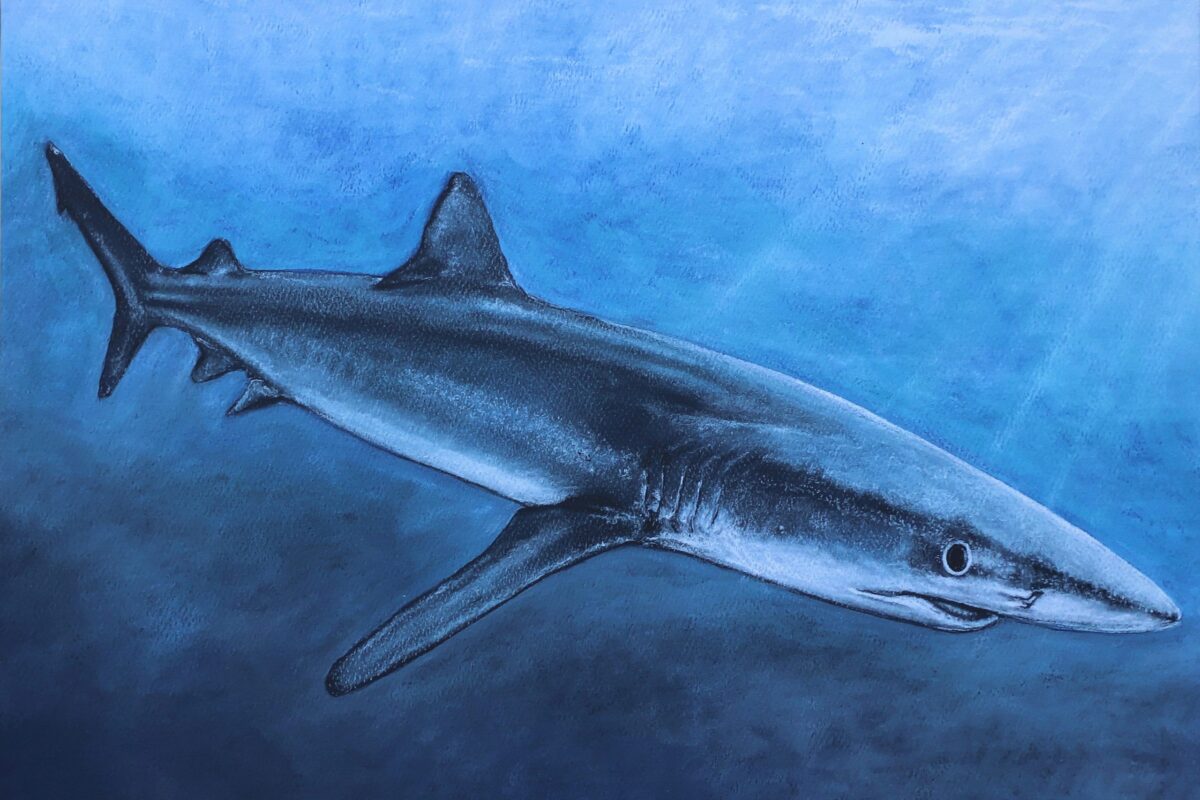
An estimated 20 million blue sharks are killed every year and enter the shark fin trade. Save this species form overfishing and the fin trade by protecting them under CITES Appendix II .